Flipkart

Wednesday, 8 July 2015

Economics - Inflation and Business Cycle

1. Consider the following statements.
  1. An extremely low aggregate demand.
  2. Comparatively lower inflation.
  3. Production houses go for forced labour cut in order to reduce production cost.
Which of the following stage of Business cycle best represents the above characteristics?
  1. Recession
  2. Recovery
  3. Depression
  4. Boom
Ans: (3)
Explanation:
The major traits of depression could be as given below:
(a) An extremely low aggregate demand in the economy causes activities to decelerate;
(b) The inflation being comparatively lower;
(c) The employment avenues start shrinking forcing unemployment rate to grow fast;
(d) To keep the business going, production houses go for forced labour-cuts or retrenchment (to cut down the production cost and be competitive in the market) etc.
Recession Vs Depression:
Recession is somewhat similar to the phase of ‘depression’ – we may call it a mild form of
depression – fatal for economies as this may lead to depression if not handled with care and in time.
When a downturn in the GDP lasts for at least six months of time, it is termed as recession.
When the GDP drops by more than 10 percent, it results in depression.

2. Which of the following government actions can be used as remedy for the “recession”
phase of the business cycle?
  1. Cut in the direct and indirect taxes.
  2. Slashing interest rate and liberalizing the lending procedures.
  3. Upward revision of salaries and wages.
Select the correct code from below.
  1. 1 and 2 only
  2. 1 and 3 only
  3. 2 and 3 only
  4. 1, 2 and 3
Ans: (4)
Explanation:
What may a government do to rescue the economy from the phase of recession? The usual
remedies are given below:
(i) Direct and indirect taxes should be cut down, so that the consumers have higher disposable incomes (income after paying direct tax i.e. income tax) on the one hand and the goods should become cheaper on the other hand thus there is hope that the demand might pick up.
(ii) The burden of direct tax, specially the income tax, divdend tax, interest tax are slashed to
enhance the disposable income (i.e income after direct tax payment)—
(iii) Salaries and wages should be revised by the government to encourage general spending by the consumers (as the Government of India implemented the recommendations of the fifth pay commission without much deliberation in 1996–97).
(iv) Indirect taxes such as custom duty, excise duty (cenvat), sales tax, etc. should be cut down so that produced goods reach the market at cheaper prices.
(v) The government usually goes on to follow a cheap money supply policy by slashing down the interest rates across the board and the lending procedure is also liberalised.
(vi) Tax breaks are announced for new investments in the productive areas. etc.

3. Consider the following statements with regards to inflation indexed bonds (IIBs).
  1. IIBs will provide inflation protection to principal only.
  2. Existing tax provisions will be applicable on interest payment and capital gains on IIBs.
  3. Foreign institutional investors (FIIs) are not allowed to invest in IIBs.
Which of the above statements are NOT correct?
  1. 2 and 3 only
  2. 1 and 2 only
  3. 1 and 3 only
  4. All of the above
Ans: (3)
Explanation:
Inflation Indexed Bonds (IIBs) were issued in the name of Capital Indexed Bonds (CIBs) during 1997. The CIBs issued in 1997 provided inflation protection only to principal and not to interest payment. IIBs will provide inflation protection to both principal and interest payments.
Tax provisions will be applicable on interest payment and capital gains on IIBs. There will be no special tax treatment for these bonds.
IIBs would be Government securities (G-Sec) and the different classes of investors eligible to invest in G-Secs would also be eligible to invest in IIBs. FIIs would be eligible to invest in the IIBs but subject to the overall cap for their investment in G-Secs (currently USD 25 billion).

For more details:
https://rbi.org.in/scripts/FAQView.aspx?Id=91

4. Which of the following step/s may result in inflation?
  1. Increase in the repo rate.
  2. Increase in the indirect taxation rate.
  3. Proper maintenance of buffer stock of major agricultural products.
  4. Decrease in the crude oil production.
Select the correct code from below.
  1. 2, 3 and 4 only.
  2. 4 only.
  3. 2 and 4 only.
  4. 1 and 3 only.
Ans: (3)
Explanation:
Inflation is a sustained rise in overall price levels.
Repo rate is the rate at which the RBI lends money to commercial banks. In the event of
inflation, central banks increase repo rate as this acts as a disincentive for banks to borrow from the central bank. This ultimately reduces the money supply in the economy and thus helps in arresting inflation.
Introduction of increased taxes is one of the fiscal policies to control inflation. But sometimes
this may result in cost-push inflation, as increased indirect tax rate increases cost of
production.
Maintenance of buffer stock of major agricultural products could be used in supply
management which maintains price stability.
Decrease in crude oil production increases crude oil price, which in turn increases cost of
production.


5. Consider the following statements regarding Producer Price Index (PPI).
  1. PPI gives an idea of consumer prices in the future.
  2. In PPI only basic prices and taxes are used while trade margins and transport cost are excluded.
Which of the above statement/s is/are correct?
  1. 1 only
  2. 2 only
  3. Both 1 and 2
  4. Neither 1 nor 2
Ans: (1)
Explanation:
The PPI measures price changes from the perspective of the producer while the cosumer price index (CPI) measures it from the consumers’ perspective. As the producers sell at higher prices to their wholesellers, so retailers and the price increase is translated into the higher consumer prices—thus the PPI is useful in having an idea of the consumer prices in the future.
In PPI, only basic prices are used while taxes, trade margins and transport costs are excluded.
This index is considered a better measure of inflation as price changes at primary and
intermediate stages can be tracked before it gets built into the finished goods stage.
The proposal of switching over to the PPI (from the WPI) came up from the Government by
mid-2003. A working Group was set up in mid-2003–04 under the chairmanship of Prof. Abhijit Sen, Member, Planning Commission to fulfill the twin tasks of:
I. Revising the current series of the WPI (i.e. base 1993–94) and
II. Recommending a producer price index (PPI) for India which could replace the WPI.

6. Inflation has multidimensional effects on the economy. Which of the following is/are
correct regarding the effects of inflation?
  1. Lenders suffers and borrowers benefit out of inflation.
  2. In the short run, investment in the economy is boosted.
  3. Burden of tax payer is increased as they are forced to pay increased taxes.
Select the correct code from below.
  1. 1 only
  2. 1 and 3 only
  3. 2 and 3 only
  4. All the above
Ans: (4)
Explanation:
There are multi-dimensional effects of inflation on an economy both at the micro and macro
levels. It redistributes income; distorts relative prices; destabilises employment, tax, saving and investment policies and finally it may bring in recession and depression in an economy.
I. On Creditors and Debtors
Inflation redistributes wealth from creditors to debtors i.e. lenders suffer and borrowers benefit out of inflation. The opposite effect takes place when inflation falls (i.e. deflation).
II. on Investment
Investment in the economy is boosted by the inflation (in the short-run) because of two
reasons:
a. Higher inflation indicates higher demand and suggests enterpreneurs to expand their
production level, and
b. Higher the inflation, lower the cost of loan
III. on Tax
Tax-payers suffer while paying their direct and indirect taxes. As indirect taxes are imposed ad valorem (on value), increased prices of goods make tax-payers to pay increased indirect taxes. Similarly, due to inflation, direct tax (income tax, interest tax, etc.) burden of the tax-payers also increases as tax-payer’s gross income moves to the upward slabs of official tax brackets (but the real value of money does not increase due to inflation; in fact, it falls).

7. Consider the following statements regarding “core inflation”.
  1. Core inflation is an indicator of long-term trend in the inflation.
  2. While calculating core inflation transitory price changes are excluded.
Which of the above statement/s is/are correct?
  1. 1 only
  2. 2 only
  3. Both 1 and 2
  4.  Neither 1 nor 2
Ans: (3)
Explanation:
Core inflation is the non food manufacturing inflation. Core inflation shows price rise in all
goods and services excluding energy and food articles.
In India, it was first time used in the financial year 2000–01. This was criticized by experts on account of excluding food articles and energy out of the inflation and feeling satisfied on the inflation front. Basically, in the western economies, food and energy are not the problems for the masses, while in India these two segments play the most vital role for them.
For more details:

8. WPI and CPI are two important indices for measuring inflation. But there are substantial
differences between the two. Which of the following statements is/are true bout the
difference between CPI and WPI?
  1. WPI measures inflation at wholesale market, while CPI measure at retail level.
  2. WPI is more or less same throughout the country but CPI vary across the region.
Select the correct code from below.
  1. 1 only
  2. 2 only
  3. Both 1 and 2
  4. Neither 1 nor 2
Ans: (3)
Explanation:
WPI measures inflation at wholesale market, while CPI measure at retail level. Besides, the way two indices are calculated differs, both in terms of weightage assigned to products as well as the kind of items included in the baskets of products.
Wholesale prices are more or less same throughout the country but Consumer prices vary
across the regions(rural and urban) and also across the cities according to the consumer
preference for certain products, supplies and purchasing power.

9. “Inflationary gap” refers to
  1. Difference between CPI and WPI inflation.
  2. The excess of total government spending above the national income.
  3. The shortfall in total spending of the government.
  4. None of the above.
Ans: (2)
Explanation:
The excess of total government spending above the national income (i.e. fiscal deficit) is
known as the inflationary gap. This is intended to increase the production level which
ultimately pushes the prices up due to extra-creation of money during the process.
The shortfall in total spending of the government (i.e. fiscal surplus) over the national income creates deflationary gap in the economy. This is a situation of producing more than the demand and the economy usually heads for a general slowdown in the level of demand. This is also known as the output gap.

10. New CPI series with base year 2010 are available for five major groups. For which of those five groups CPI-Rural index is not calculated?
  1. Food, beverages and tobacco
  2. Fuel and light
  3. Housing
  4. Clothing, bedding and footwear
Ans: (3)
Explanation:
New CPI indices are available for five major groups namely Food, beverages and tobacco; Fuel and light; Housing; Clothing, bedding and footwear, and Miscellaneous.
House rent index is compiled only for CPI (Urban). This index is not compiled for rural sector because of two reasons: first there is negligible number of rented dwellings in the rural areas; and the Consumer Expenditure Survey also does not provide estimate of imputed rent for owner occupied houses for this sector.

India Year Book and Current Affairs

11. Consider the following regarding ‘Telegraphy’
  1. The first telegraph came in the form of Optical telegraph.
  2. In India, it became available for public use in 1854.
  3. Continuous wave is used in wireless telegraphy
Select the correct code
  1. 1 and 3
  2. 2 and 3
  3. 1 and 2
  4. 1, 2 and 3
Solution- 4
Explanation:
Wireless telegraphy is still used widely today by amateur radio hobbyists where it is commonly referred to as radio telegraphy, continuous wave, or just CW.
Telegraph services in India date back to 1850, when the first experimental telegraph line was established between Calcutta and Diamond Harbour. The British East India Company started using the telegraph a year later, and by 1854—when the system opened to the public— telegraph lines had been laid across the country. The telegraph continued to thrive, in India and around the world, even after Alexander Graham Bell patented the telephone in 1876. For more than half a century, telegrams were sent over cable lines, but in 1902 (capitalizing on the work of Italian inventor Guglielmo Marconi) the Indian system went wireless.
The first telegraphs came in the form of optical telegraph, including the use of smoke
signals, beacons or reflected light, which have existed since ancient times.

12. ‘Project Arrow’ is associated with
  1. Department of Post
  2. Maritime exercise between France and India
  3. DRDO project
  4. A scientific research project under CSIR
Solution- 1
Explanation:
‘Project Arrow, an initiative to transform Department of Posts into a vibrant and responsive
organization and to make a visible and positive difference to quality and efficiency of service to the customers, was conceived in April 2008.

13. Consider the following statements regarding Post Office Saving Banks in India
  1. The Department of Posts operates Small Savings on behalf of Ministry of Rural Development
  2. Post office saving banks do not offer ATM services
  3. The Post Office Savings Bank operates Savings Account, Recurring Deposit (RD) and Time Deposit (TD) apart from other services.
Select the correct code
  1. Only 1
  2. Only 2
  3. Only 3
  4. 1, 2 and 3
Solution- 3
Explanation: Comes under Ministry of Finance and offers ATM services as well

14. Consider the following
  1. The territorial sea is regarded as the sovereign territory of the state, although foreign ships (both military and civilian) are allowed innocent passage.
  2. The difference between the territorial sea and the exclusive economic zone is that the first confers full sovereignty over the waters, whereas the second is merely a "sovereign right" which refers to the coastal state's rights below the surface of the sea.
  3. The EEZ is 188 nautical miles from Territorial waters and includes contiguous zone.
Select the correct code
  1. 1 and 2
  2. 2 and 3
  3. Only 1
  4. 1, 2 and 3
Solution- 4
Explanation:
From Base line
Territorial waters- 12 Nautical Miles
Contiguous zone- 24 Nautical Miles
EEZ- 200 Nautical Miles
From Territorial Waters- EEZ will be 188 Nautical Miles an includes Contiguous Zones 
Territorial waters are also called Territorial sea.

15. Consider the following
  1. Preservation and protection of Maritime Environment
  2. Collection of Scientific Data
  3. Protection and assistance to fishermen at sea
Which of the above includes the functions of Indian Coast Guard?
  1. 1 and 3
  2. 1 and 2
  3. 1, 2 and 3
  4. Only 3
Solution- 3
Explanation:
Functions of Coast Guard as per Coast Guard Act 1978
(1) Safety and protection of artificial islands and offshore terminals installations and devices in Maritime Zones.
(2) Protection and assistance to fishermen at sea while in distress.
(3) Preservation and protection of marine environment.
(4) Prevention and control of marine pollution.
(5) Assistance to customs and other authorities in anti-smuggling operations.
(6) Enforcing of enactments being in force in the maritime zones.
(7) Other matters, including measures for the safety of life and property at sea and collection of scientific data.

16. India successfully launched its first subsonic cruise missile named ‘Nirbhay’. Consider the following w.r.t it
  1. Sub-sonic cruise missiles are able to fly at very low altitudes, close to the earth, without being detected
  2. Nirbhay blasts off like a rocket, but then unlike a missile, it turns into an aircraft.
  3. Like other ballistic missiles Nirbhay also has wings and pronounced tail fins.
Select the correct codes
  1. 1 and 3
  2. 2 and 3
  3. 1 and 2
  4. 1, 2 and 3
Solution- 3
Explanation:
Nirbhaya has wings and pronounced tail fins unlike other ballistic missiles. So third statement is wrong.

17. Consider the following about ‘Guru Poornima’
  1. It is an Indian festival celebrated by Hindus, Jains and Buddhists
  2. The first full moon after Summer Solstice is known as Guru Poornima.
  3. Lord Shiva, the first yoga practitioner (Adi Yogi) is said to have begun imparting the knowledge of yoga to the rest of mankind on this day and became the first guru (Adi Guru).
Select the correct codes
  1. 1 and 2
  2. 2 and 3
  3. 1 and 3
  4. 1, 2 and 3
Solution- 4
Explanation:

18. The terms ‘Pushkaram’ and ‘Amrapali’ are related with
  1. Bharatnatyam
  2. Kuchipuddi
  3. Kathakali
  4. Odissi
Solution- 2
Explanation:

Tuesday, 7 July 2015

Geography

Geography - Mineral & Climate

1. Heat waves was in news recently which killed more than 2,500 people in the year 2015 till June.
Consider the following statements regarding heat waves
  1. Heat wave’s adverse impact occurred mainly in Northern and Eastern region of India.
  2. Severe heat waves come under National Calamity just like cold waves.
  3. IMD recommended to declare a region as severeheat waves affected region if temperature reached beyond 45 degree Celsius.
  4. It is a natural calamity found in tropical regions and not in temperate regions.
Choose the correct statement/s from the code
  1. 1, 3 only
  2. 2, 3, 4 only
  3. 1, 2, 3 only
  4. All the above
Answer: 1
Explanation: Heatwaves impacted mainly in northern states like Uttar Pradesh, Bihar and Eastern states like Odisha, Andhra Pradesh, Telangana.
Central government has declared cold waves, tsunamis etc as National Calamity but not heat waves.
Thus recently after the heat waves took toll of many lives country wide, there was a demand from experts as well as many states for heat waves to be declared as National Calamity.
Heat waves are the phenomenon found not only in tropical regions but also in temperate regions.
Example: UK experienced the severe heat waves in 2013.

2. During monsoon season the ITCZ (inter tropical convergence zone) shifts almost upto 25 degree North latitude over the Indian subcontinent while it rarely crosses 15 degree North latitude in other regions. This is because
  1. Vast landmass of Eurasia located to the North of the Equator.
  2. Intense low pressure over the Northwestern region of Indian subcontinent and over the vast, high altitude Tibetan plateau pulls ITCZ Northwards.
  3. Shifting of Westerly jet streams to the North of Tibetan plateau at the end of the month of May.
Choose the correct code from the following
  1. 1, 2 only.
  2. 2, 3 only.
  3. 1, 3 only.
  4. All of the above.
Answer: 4
Explanation:Inter tropical convergence zone is termed as a thermal equator and is the zone where the Northeast and Southeast trade winds meet. This ITCZ shifts Northwards upto 25 degree North latitude during the months of June-July. This is facilitated by all the above points mentioned.
Westerly jet streams: These shifts southward during winters because of the southern shift of entire pressure belts by some 10 degree latitudes which is in turn because of Southern shift of Sun towards Tropic of Capricorn during winters. These jet streams because of vast Tibetan plateau,get bifurcated into 2 parts, with one part traversing south of Himalyan mountains and the other to the north of Tibetan plateau. With the advent of summers and gradual shift of Sun towards Tropic of Cancer, the part of the jet streams to the South of Himalayas gets weakened. At the end of the month of May the Westerly jet
streams completely shifts to the North of Himalayas and thus becomes stronger over the Central China and also Japan. This Northern shift facilitates the Northward shift of ITCZ.

3. The frequency of the cyclones is lower in Arabian sea when compared to Bay of Bengal. This is because
  1. Arabian sea surface temperature is higher compared to that of Bay of Bengal.
  2. Bay of Bengal receives the remnants of the typhoons originated in Northwestern Pacific ocean.
  3. Arabian sea receives the remnants of cyclones from Bay of Bengal.
Choose the correct code from the following
  1. 1, 2 only.
  2. 1, 3 only.
  3. 2, 3 only.
  4. All the above.
Answer: 3
Explanation:Bay of Bengal being a closed and a smaller water body, it has higher surface temperature compared to Arabian sea.
North Western region of Pacific ocean has the highest proportion of global tropical cyclones. These cyclones which originate in the Pacific ocean start moving towards south western direction and finally reach Bay of Bengal. But by the time they reach, they almost lose their energy and only remnants of cyclones reach Bay of Bengal. Similarly the cyclones originated in Bay of Bengal reach Arabian sea but only remnants of cyclones after shedding their energy while traversing over the peninsular landmass.

4. Consider the following statements regarding tropical cyclones which is one of the important determining factor for the success of Indian monsoons.
  1. These are termed as the heat engines, which derive their energy from the condensation of water vapor into water droplets/drops.
  2. More than 50% of the energy derived is utilized to sustain the wind movement around the central eye.
  3. A mature cyclone releases energy equivalent to that of 100 hydrogen bombs.
Which of the following statements are NOT true
  1. 1, 2only.
  2. 1, 3only.
  3. 2 only.
  4. None of the above.
Answer: 3
Explanation:
The energy is derived from the condensation of water vapor into water droplets and of this only meager 3% is utilized for sustaining the wind movemnents.

5. Snow line is a line above which no vegetation grows on high altitude mountains because of permanent snow cover. This snow line is higher for Eastern Himalayas compared to that of Western Himalayas. What are the reasons?
Consider the following statements
  1. Eastern Himalayas are near to the Equator.
  2. Western Himalayas are more continental in their location thus has lesser maritime influence.
  3. Southwest monsoon winds have the moderating effect on the Western Himalayas.
Choose the correct code
  1. 1, 2 only.
  2. 1, 3 only.
  3. 2, 3 only.
  4. All the above.
Answer: 1
Explanation: Snowline is a function of altitude and latitude. Higher is the latitude and altitude lower is the snowline. 

Eastern Himalaya’s altitude as well as latitudinal location is lower compared to Western Himalayas. 
Due to higher altitude as well as latitude the temperature is much less in the Western Himalaya and as a consequence the snowline in the Western Himalaya is at a lower altitude than in the Eastern Himalaya.
Southwest monsoon winds bring more rainfall to Eastern Himalayas than compared to Western Himalayas. Thus monsoon winds can have moderating effect on Eastern Himalayas and in turn increasing the altitude of snowline. Thus 3rd statement is wrong.

6. Coal bed methane is released during coal mining and is generally recommended to extract it rather than letting it evaporate into the atmosphere when untapped because
  1. CBM if is not extracted can cause fire hazards while mining deep areas.
  2. CBM if allowed to escape into atmosphere, will get converted into carbon monoxide which is a potent green house gas.
Which of the statements is/are the correct reason/s?
  1. 1 only.
  2. 2 only.
  3. Neither 1 nor 2.
  4. Both 1 and 2.
Answer: 2
Explanation:
CBM doesn’t cause any as such fire hazards if left unextracted.
CBM once extracted and used as a source of energy it will be less harmful to environment because the burning of CBM releases majorly carbon dioxide. But if it is not extracted it will escape into atmosphere and get converted into carbon monoxide which is more potent green house gas than carbon dioxide.

7. Consider the following statements regarding the production and reserves of copper in India.
  1. Rajasthan has the largest reserves of copper and is also the highest producer of copper in India.
  2. India is self sufficient in copper production and also at times it has also exported copper to countries like Japan, South Korea etc.
  3. Production of copper is a tedious job especially in India as the copper ore found in India as it is of the lower grade compared to International grade of the ore.
Which are the correct statements?
  1. 1 only.
  2. 1, 3 only.
  3. 2, 3 only.
  4. 3 only.
Answer: 4
Explanation:

Rajasthan although has the highest reserves, it is not the highest producer. Madhya Pradesh is the highest producer currently.
The production of copper in India always falls short of demand and thus we import copper from countries like US, Japan, Canada etc.
Third statement is true because in India the metal content in the ore is quite low compared to international average. The metal content is less than 1% in India while the international average stands at 2.5%.

8. Consider the following statements regarding biogas which is a very important source of energy in rural areas.
  1. Biogas has a higher thermal efficiency compared to charcoal, cow dung, kerosene.
  2. Not only biogas serves as a source of energy in the form of fuel but also can be used as manure for farm crops.
  3. It is slightly less environment friendly as it releases green house gases when burnt as a fuel.
Choose the incorrect code from the following
  1. 1, 2 only.
  2. 2, 3 only.
  3. 3 only.
  4. None of the above.
Answer: 3
Explanation:
Biogas typically refers to a mixture of different gases produced by the breakdown of organic matter in the absence of oxygen. Biogas can be produced from raw materials such as agricultural waste, manure, municipal waste, plant material, sewage, green waste or food waste. High levels of methane are produced when such wastes is stored under anaerobic conditions. During storage and when manure has been applied to the land, nitrous oxide is also produced as a byproduct of the denitrification process. Nitrous oxide (N2O) is 320 times more aggressive than carbon dioxide and methane 21 times more than carbon dioxide. Thus biogas production negates all these harmful gases and thus it is a environment friendly gas.

9. Consider the following statements which describe the properties of a particular metal
  1. It as a valuable metal of which the major ore is Wolfram.
  2. It is self hardening which it imparts to the steel when alloyed with the steel.
  3. Steel when alloyed with this metal, is used in manufacturing of ammunitions, armour plates,heavy guns etc.
  4. Its alloys are heat resistant, corrosion resistant and hardfacing.
Choose the correct metal from the options
1. Tungsten.
2. Chromium.
3. Copper.
4. Titanium.
Answer: 1
Explanation:
Tungsten is a dull silver-colored metal with the highest melting point of any pure metal.
Also known as wolfram, from which the element takes its symbol, W, tungsten is more resistant to fracturing than diamond and is much harder than steel. It is the refractory metal's unique properties - its strength and ability to withstand high temperatures - that make it ideal for many commercial and industrial applications.

10. Consider the following statements regarding the atomic minerals.
  1. Uranium occurs both in the earth’s crust as well as sea water.
  2. India has one of the richest reserves of thorium in the world.
  3. US has the highest reserves of uranium in the world.
Which of the above statements are correct ?
  1. 1 only.
  2. 1, 2 only.
  3. 2, 3 only.
  4. All the above.
Answer: 2
Explanation:Australia has the highest reserves of uranium and not the US.

India Year Book(Land and the People/National Symbols) and Current Affairs

11. To bring prosperity and tranquility in north-eastern region of India what actions or plans you think is/are good from given below
  1.  Shift from voluminous crops to high value horticulture crops.
  2.  More strict laws to counter insurgency.
  3.  Policy to give boost to bamboo based handicraft industries.
  4.  Laying down of rail tracks to increase connectivity among north-eastern cities.
Select the correct code
  1. 2, 3 only
  2. 3 only
  3. All of the above
  4. None
SOLUTION: 2
Explanation:
North-east region has rough terrain so possibility of laying down tracks wouldn’t be nice idea to execute.
It has been established by facts in history that peace was brought by negotiation rather strict laws. Strict laws have yielded an atmosphere of animosity.

12. What are the important commercial crops produced in Malabar region from given below:
  1.  Coffee and tea
  2.  Tobacco
  3.  Betelnut
  4.  Rubber
  5.  Cashewnut
Select the correct code

  1. 1, 2, 3 only
  2. 1, 3. 5 only
  3. All of the above
  4. 1, 3, 4, 5 only
Answer: 4
Explanation: Tobacco is mainly produced in Guntur and Prakasham district of Andhra

Pradesh and Kheda district of Gujrat.
Malabar region: Malabar region is an area of southern India lying between the Western Ghats and the Arabian Sea. It included the northern half of the state of Kerala and some coastal regions of present-day Karnataka.


13. According to world biogeographic classification. India represents which two major realms
  1.  Palearctic and Indo-Malayan
  2.  Palearctic and Neo-arctic
  3.  Neo-arctic and Indo-Malayan
Select the correct code
  1. Only 1
  2. 1 and 2
  3. Only 3
  4. None
Answer: 1
Realm: An area on the earth's surface marked by certain properties.

14. Consider the statements below:
  1. Central tribal belt is dominated by Proto-Australoid racial strain.
  2. Hills of southern India is inhabited by tribal of Negritoes racial strain.
  3. Negritoes racial strain is confined to islands of Andaman and Nicobar only.
Select the correct code
  1. 1, 2 only
  2. 1, 3 only
  3. 3 only
  4. None
SOLUTION: 1

15. National symbols hold a revered position among Indians. It is/was maintained and protected by
  1.  Non-statutory instructions
  2.  Statutes
  3.  Constitutional references
Select the correct code
  1. 1, 2 only
  2. 2, 3 only
  3. 3 only
  4. All of the above
SOLUTION:4
Explanation:
Fundamental duties say about paying respect to national symbols. There are various legislation pieces like the flag code of India 2002 which were legislated to seek compliance to standards from citizens.

16. “Give It Up” campaign will have positive impact on
  1. Health of rural India.
  2. Environment.
  3. Revenue of Local bodies.
  4. Comforts of rural women.
Select the correct code
  1. 1 only
  2. 1, 3 only
  3. 1, 2, 4 only
  4. All of the above
SOLUTION: 3

17. Major initiatives envisaged to make ‘Digital India” campaign a success include
  1. Communication infrastructure and services
  2. Products like digital lockers, e-sign and e-hospital/ORS etc.
  3. Portals and apps
  4. Opening of research institutions
  5. Important Policies initiatives.
Select the correct code
  1. 1, 2, 3 only
  2. 1, 2. 3. 5 only
  3. 3 only
  4. All of the above
Solution: 4

18. Union cabinet proposed amendment to the Prevention of corruption act 1988. Proposed
amendments include
  1. Punishment for both bribe giver and bribe taker.
  2. Enhances punishment terms.
  3. Non-monetary gratification is covered in the definition of gratification in the PCA 1988.
Select the correct code
  1. 1, 2 only
  2. 1, 3 only
  3. 3 only
  4. All of the above
SOLUTION:4

19. Socio-demographic changes at source that are result of rural to urban migration in India.
  1. Low sex-ratio.
  2. Population pyramid will shrink at its base in years to come.
  3. Feminization of workforce.
Select the correct code
  1. 1, 2 only
  2. 2, 3 only
  3. 3 only
  4. All of the above
SOLUTION: 4
Explanation: Rural to urban migration mainly constitutes of male so sex ratio goes down. Even migration brings down fertility rate so in future population pyramid will shrink. Because rural to urban migration majorly takes place among men and hence feminization of workforce (since rural workforce in agriculture will be more of women due to migration).

20. Recently ISRO PSLV-C23 placed satellites of foreign countries, these countries include
  1. France
  2. Germany
  3. Italy
  4. Malaysia
Select the correct code
  1. 1, 2 only
  2. 1, 3 only
  3. 1, 2, 3 only
  4. All of the above
Solution: 1
Explanation: Countries include France, Germany, Singapore and Canada.

21. Recently launched Pro-Active Governance and Timely Implementation (PRAGATI) platform will give boost to the concept of

  1. Cooperative federalism
  2. Good Governance
  3. Gender inclusiveness

Select the correct code

  1. 1, 2 only
  2. 2, 3 only
  3. 1, 3 only
  4. All of the above

Solution: 1
Explanation: http://www.dnaindia.com/india/report-pm-modi-launches-pragati-platform-for-redressal-of-grievances-2071960

22. Consider the statements regarding mitochondrial Donation Technique:
  1. It involves addition of healthy mitochondria from donor women to an egg from other women with defective mitochondria.
  2. This technique prevents new born babies from heart failure and blindness only.
  3. There are two different procedures used in mitochondrial donation technique –(a) Maternal Spindle Transfer (b) Pronuclear Transfer technique
Select the correct code
  1. 1 only
  2. 1, 2 only
  3. 1, 3 only
  4. All of the above
Solution: 3
Explanation: It prevents new born babies from brain damage, muscle wasting, heart failure and blindness due to defective mitochondria.

23. Recently a cyclonic storm named Ashobaa was in news. Consider the statements
  1. It was developed over east central Bay of Bengal.
  2. It was named by Srilanka as there is a system of naming storms developed in Northern India Ocean On rotational basis..
  3. It caused flood in eastern Oman.

Select the correct code
  1. 2 only
  2. 1, 2 only
  3. 2, 3 only
  4. All of the above
Solution: 3
Explanation:
It was developed over east central Arabian Sea

24. Consider the statements
  1. Cryogenic engine provides more thrust with each kg of propellant it uses.
  2. Cryogenic engine uses liquid oxygen and liquid hydrogen at very low temperature
  3. Engine need low mass flow rate of both oxidizer and fuel to avoid explosion in combustion chamber.
Select the correct code
  1. 1, 2 only
  2. 1, 2 only
  3. 2, 3 only
  4. All of the above
Solution: 2
Engine need high mass flow rate of both oxidizer and fuel to generate a sufficient thrust. Independent regulators are there to check thrust control.

25. Consider the following statements with reference to hot and cold water
  1. Cold water freezes faster than hot water
  2. This phenomenon or effect is know as Mpemba Effect.
Select the correct code
  1. Only 1
  2. Only 2
  3. Both
  4. None
Solution: None
Explanation: 
Hot water seems to freeze faster than cold water, known as the Mpemba effect. The effect was named after the Tanzanian student who in 1963 noticed that hot ice cream mix freezes faster than a cold one.  The effect was first observed by Aristotle in the 4th century BC, 


Daily News Mail - News of 07/07/2015

Prime Minister’s Visit to Central Asia
Prime Minister on 6th July left for Central Asian tour encompassing 6 countries i.e. Central Asia (Uzbekistan, Kazakhstan, Turkmenistan, Kyrgyzstan and Tajikistan) and Russia. During this tour India will touch upon wide array of issues such as culture, security, natural resources and connectivity. Along with bilateral visits are the multilateral summits of BRICS and SCO at Ufa in Russia.

India considers Central Asia as its extended neighborhood, but geographical barriers makes them appear remote than any other country of the world. India as we know has been blocked by Pakistan and China. It depends solely on Iran for any connectivity. There have been sustained negotiations from last few decades’ connectivity and energy supplies, but so far India has not received even a meagre return on Investment. Region’s politics is extremely complex for India. It needs a pragmatic and dynamic personality in seat to break ice with Central Asian leader and that’s what Indian PM will be focusing on. In past, P.V. N. Rao, A.B. Vajpayee and M.M. Singh visited central Asian countries, but it made little difference. It was only J. Nehru who visited all 5 central countries in one visit in 1955 and he had exemplary understanding of culture of the region.


Till partition British India had regional (in turn cultural) contiguity with Central Asia, but after about 70 years of minimal contacts, that land appears alien. Central Asians on the other hand have strong nostalgic feeling about India which they still refer to as Hind or Hindustan. People to people contacts are minimal. These countries are having very strict visa regimes so tourism is almost nonexistent. India enjoys ample goodwill of Central Asians. But China with its deep pockets and accessibility has left little space for India. Economies of these countries almost wholly depend upon China and Russia.

China has developed unique understanding with these nations under which it extends loan meant for developing oil and gas sector of a particular Central Asian country and in repayment of that loan China is supplied Oil and Gas for decades. This is a win-win situation as it provides market for Oil and gas exploration companies of China, while it also takes care of its energy starved economy. On Indian side TAPI project is being negotiated, but its success depends upon Pakistan’s cooperation which is unlikely.

Connectivity for trade is another big problem. Current Imports from Central Asia moves all the way to Xinjiang, then to Shanghai and finally arrives at Mumbai, opposite route for exports. Currently trade with Russia happens through St. Petersburg. It’s absurd that trade with our ‘extended neighborhood’ takes longer time and costs than that with any other region of the world. So, India is investing heavily in Chabahar port of Iran which will be extended to Afghanistan through Delaram- Zaranj highway. International North South Transport Corridor (INSTC) is also being developed. This will be multimodal (sea, road, rail) corridor Linking India (Mumbai), Iran, Central Asia, Russia and Europe.

It should be noted that India’s connectivity with Central Asia depends solely with Iran. Otherwise proactive current government has so far not given any significant impetus to India- Iran relations. It remains to be seen that what transpires after settlement of nuclear deal with Iran.

Security angle to this visit is of utmost importance. New global threat of ISIS has influenced Central Asia significantly as thousands are participating in conflict on IS’s side. Further, almost every threat to Indian establishment in history has emerged from Central Asia. Stability in Afghanistan is crucial for stability of world and depends much upon Central Asia. This is even truer when Americans are leaving and there is political immaturity and vacuum in Afghanistan.

If history tell us anything, it is that cultural and people to people links are much decisive than financial links. India is poised to loose dollar to dollar contention with China, but culturally people are relatively close to India. It was seen in recent electoral outcomes in Sri Lanka that people resent excess economic dependence on or alignment with a powerful country like China. Public was suspicious about Rajapaksa government’s over reliance on China, so they removed him through ballot. In contrast, if cultural links are established, then government is bypassed and this is an indestructible link.

Chinese ex-FM to be AIIB chief
China has named its former Finance Minister, Jin Liqun, as its choice to head the Beijing-backed Asian Infrastructure Investment Bank (AIIB), which is being seen as a rival to the U.S. and Europe-dominated banking institutions.
  • Former Finance Minister Jin Liqun has been formally nominated by China as its preferred candidate to head the $100 billion AIIB. He is currently the secretary-general of the interim multilateral secretariat for establishing AIIB.
Why he was chosen?
Since, China has 26.06% share of the votes in AIIB it gives China veto power over the choice of the president, which requires a 75% majority.

What about the vice-president?
India by virtue of being the second largest shareholder may get the post of vice-president.

India mulling proposal to join Eurasian Union
India is considering the option of signing a pact with the EEU, which has Russia, Belarus, Kazakhstan, Kyrgyzstan and Armenia as members, and will see the inclusion of Tajikistan later this year.
  • Prime Minister Narendra Modi’s ongoing visit to Russia and five Central Asian nations could expedite the feasibility studies under way to assess whether India should sign a free trade agreement (FTA) with the Eurasian Economic Union (EEU).
  • For this purpose, a joint study group, headed by a Joint Secretary in the Ministry of Commerce, has been constituted and has been mandated to study the benefits of joining the trade bloc.
  • An invitation to join the bloc was extended by Russia, and a joint statement for establishment of a joint study group between India and the EEU was signed when Commerce and Industry Minister Nirmala Sitharaman visited Russia recently.
How India will be benefitted?
  • India has to protect investment and trade from becoming imbalanced. It also has to ensure that its goods are not discriminated against. Hence, it is best for India to gain access to all important trade blocs.
  • India is keen to enhance its ties with the Central Asian countries, which have huge oil and gas reserves and are an important link to Afghanistan.
  • It will be an opportunity for improving trade ties as well as foster relations to check the menace of growing radicalization in the region.
About Eurasian Economic Union:
  • The Eurasian Economic Union is an international organization for regional economic integration. It has international legal personality and is established by the Treaty on the Eurasian Economic Union.
  • It provides for free movement of goods, services, capital and labor, pursues coordinated, harmonized and single policy in the sectors determined by the Treaty and international agreements within the Union.
  • The Member-States of the Eurasian Economic Union are the Republic of Armenia, the Republic of Belarus, the Republic of Kazakhstan and the Russian Federation.
  • The Union was created to comprehensively upgrade, raise the competitiveness of and cooperation between the national economies, and to promote stable development in order to raise the living standards of the nations of the Member-States.
  • The Supreme Council is the Union’s supreme authority. The Heads of the Member-States form the Supreme Council.
  • The Intergovernmental Council is a Union’s body consisting of the Heads of the Member-States Governments.
  • Eurasian Economic Commission is a permanent supranational regulatory body of the Union, with its members appointed by the Council of the Commission and the Board of the Commission. The core tasks of the Commission are fostering the conditions to support the operation and development of the Union, and drafting proposals in the field of economic integration within the Union.
  • The Court of the Eurasian Economic Union is the court of justice of the Eurasian Economic Union, which ensures the uniform application of the EAEU Treaty and other Union treaties by the Union Member-States and bodies.
  • The Eurasian Economic Union has an integrated single market of 176 million people and a gross domestic product of over 4 trillion U.S. dollars (PPP).
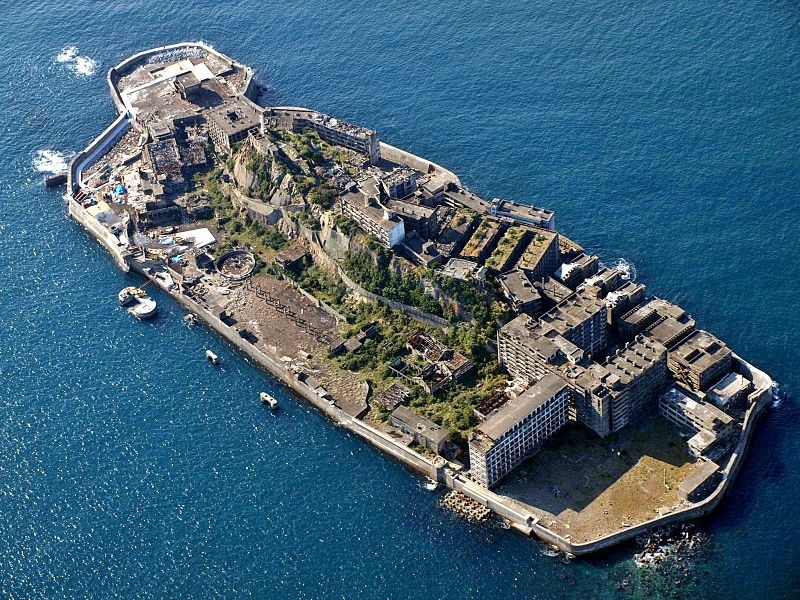
Controversial Meiji sites get world heritage status
The UN’s cultural body recently conferred world heritage status on a number of new sites including some seen as representative of Japan’s industrial revolution, as South Korea lifted its opposition to the listing.
  • UNESCO’s World Heritage committee added 23 sites considered representative of Japan’s industrial revolution under Emperor Meiji (1868-1910) to its vaunted list.
  • The 23 Meiji period (1868-1912) sites include coalmines and shipyards that Japan says contributed to its transformation from feudalism into a successful modern economy.
  • Japan is celebrating the sites’ inclusion, which is expected to boost tourism and opens up sources of funding for preservation work.
  • Inclusion on UNESCO’s World Heritage list can bring economic benefits, because as well as being a powerful tourist draw, world heritage sites are eligible for financial assistance towards preservation.
South Korea had, in the past, opposed the application for world heritage status unless clear reference was made to the use of an estimated 60,000 labourers forced to work at seven of the sites, including the island coalmine Gunkanjima, during Japan’s 1910-1945 colonial rule over the Korean peninsula.

The period from 1868 until 1912 in Japan is called the Meiji era – after the name chosen by the young prince Mutsuhito, when he followed his father to the throne. Meiji means in Japanese ‘the enlightened rule’. During the Meiji period Japan underwent a stunning development from a medieval society to a leading economic and military power in Asia.

The BRICS countries are planning to create a currency pool under the Contingent Reserve Arrangement (CRA) and officially launch their New Development Bank (NDB) in the upcoming Ufa summit in Russia. Critically examine the intentions behind such a currency pool and its likely consequences. (200 Words)
The Contingent Reserve Arrangement(CRA) as a part of NDB and the proposed creation of currency pool under it , is being launched by BRICS nations with intentions to provide protection against global liquidity pressures and when a member nation's currency issues is adversely affected by global financial pressures .It would also provide assistance to other countries suffering from the economic volatility.The initiative and it's different aspects are summarized as below:-
Positive impacts:-
1. the proposed currency pool would reduce the dependence of BRICS nations on dollars and euros for international trade and payments thus, serving as an alternative currency to the these traditionally dominant currencies of the Western nations in the international exchange and trade markets.
2.would reduce the risks of member nations from any volatility in the international market by shielding their currencies from any severe affects and allowing mutual trade to go unabated without mutual payments into dollars and euro .
3.The CRA will serve as buffer to overcome short-term liquidity pressure and meet unexpected risks or balance of payment burdens.
4. will facilitate currency swap among member countries and insulation to local economy and banks in the event of impositions of sanctions and financial embargoes .

Negative aspects or grey areas:-
1. dollar and euro are still the two most tradeable currencies in the international exchange market for trade and payments .It will be hard to challenge their dominance and promote any other currency as alternative .
2. The benefit of the currency pool under CRA would be limited to the trade and payments within the BRICS members only.Most of the BRICS members have far more trades in terms of volume and amount with non-BRICS nations than among themselves . 
However, the existing supremacy of the U.S. dollar, the new currency order likely to be set by CRA may not necessarily be a full alternative but it is sure a welcome beginning in that direction.

Critically analyse the way national education policy in India has evolved since independence, its changing objectives and various challenges it is facing since then. (200 Words)
India’s education policy since Independence got initiated with the University Education Commission [1950], Secondary Education Commission [1952] and the Education Commission [1964]. 
- The National Policy on Education [NPE, 1968] marked a turning point with focus on equal opportunity in education for national and economic integration.
- The 42nd CA Act, 1972 shifted Education to Concurrent List setting the stage for further reforms.
- Thereafter, NPE, 1986 provided for a national curriculum, "child-centered approach" in primary education & inclusive opportunity for women, SCs & STs and higher education reforms
- 86th CA Act, 2002 made Education a Fundamental Right under Article 21-A, and imbibed it in Directive Principles and Fundamental Duties. 
- In 2009 the Right to Education Act increased enrolment and propelled primary
education

Yet, despite huge efforts, the education policy faces following challenges, among others:
- Huge rate of drop outs in primary and elementary education
- Weak teaching faculty coupled with training facilities, outdated curriculum and poor infrastructure
- Exam oriented with focus on rote-learning system
- Poor employability of graduates 
- Wide disparities across socio-religious groups, genders and regions

The New Education Policy should tackle these challenges head-on and focus extensively on ACCESS, EQUITY and QUALITY, instead of propagating the same technocratic orientation.

It was recently reported that the International Labour Organisation (ILO) is opposed to India’s labour reform measures. Write a critical note on these measures and examine why ILO is opposing to them.
Recently, a slew of measures that have been proposed by the Indian government in order to reform labour laws in the country ,have come under the criticism of several trade unions including the International Labour Organisations(ILO) .Some of these measures along with the positive and negative aspects of these proposed amendments are summarized as below:-
Positive aspects:-
1.a single online compliance portal providing for self-certification, would simplify procedures and complexity of filling compliance with the labor laws ,reducing the number of forms from 16 earlier to just 1,providing more business and investment friendly environment .
2. extending the liability for ensuring the safety of an instrument used in the factory to the designer of that instrument and mandating shelters and restrooms .
3.setting up universal account numbers (UAN) for Provident Fund holders UAN would mean portability of accounts of EPF subscriber,allowing them to transfer or register their accounts to any EPF available.
Negative aspects :-
1. Among the many amendments proposed to the Factories Act of 1948, one proposes to exempt units that employ 20 workers (instead of the present 10) if there is electricity and 40 workers (instead of the present 20) if there is no electricity, from the purview of the factories law. These numbers were set long ago. Apparently, if these amendments were passed, some 50% of the factories would no longer come under the purview of the factories law. 
2. a single online compliance window that ends surprise inspections by labor inspectors and in which a computerised lottery system will decide which factory is to be inspected might reduce compliance scrutiny and checks on industries. 
3.might lead to rampant and abrupt firing of laborers by industries. 
All these negative aspects are some of the concerns raised by the ILO and trade unions.

Daily News Mail - News of 06/07/2015

Greek Crisis – The Referendum
Greece crisis has reached its boiling point with Greeks decisively rejecting conditions of austerity(meaning of austerity - sternness or severity of manner or attitude; severity; strictness; seriousness; solemnity) offered by Troika (EU, EC & IMF) in return for extension of debt repayment timelines. More worrying is the fact that as high as 61% people voted for ‘no’, which indicates unwillingness of debtors to repay their debt as per terms. This has sent shockwaves across capital markets of the world as they witnessed a notable fall in indices.

Greece adopted Euro (in place of Drachma) in 2001, that time it was agreed that it would observe canons of fiscal prudence as mandated by EU. Notably, that time too there was significant disparity in economy of Greece and richer EU countries like Germany and France. Global financial crisis of 2008 upset the economy of vulnerable Greek from which it has so far been unable to emerge. Now it has Debt to GDP ratio as high as 177%, which was below 100% couple of decades back. This means Greece owes 1.77 time its annual GDP. In actual terms its debt is above $ 300 billion. This is result of Debt trap.

Greece from long has been unable to raise taxes or control public expenditure, so that it can service its debt. Value Added Tax in Greece is lowest among EU nations. On top of it, tax evasion is severe. This prompted government to borrow fresh loans to repay old ones (along with interest). Major part of its revenue and borrowings went in interest payments. Borrowed money, unless invested in productive assets which yield return (profit) in excess of interest payable, is dangerous for borrower.

Consequently, Greece defaulted(meaning of defaulted - default/ past participle - defaulted -- fail to fulfill an obligation, especially to repay a loan or to appear in a court of law) on repayment of Euro 1.6 billion to IMF on 30th June; another payment of Euro 4.5 billion is due on 13th July. To let this happen it will have to agree with conditions of lenders (Troika), in which Germany is main party. On one hand, people of Greece will have to pay high taxes, while on the other Government will rollback public expenditure significantly. Conditions of austerity are very detailed – for e.g. govt. will have to increase retirement age from 60 to 65 or Greece will have to reduce spending of military by certain amount. Problem is that, even if this is agreed by Greeks, it will take decades for them to revive. Otherwise they will have to break away from EU, which ironically Greeks don’t want either.

If Greece gets out of the Union, it will have to revive its own currency. Recent crisis has resulted intense outflow of currency (or capital funds) from Greece. In such scenario its own currency will be constantly spiraling downwards which will make its imports much expensive, which in turn will lead to wide ‘current account deficit’ and ‘balance of payment’. In normal circumstances, net importing countries like India, makes well their ‘Current account deficit’ good by utilizing their ‘capital account’ inflows through FDI or FIIs. But, as Greece is a big financial defaulter, big investors will treat this country as untouchable and stay away from it.

Greek leadership is obviously aware of consequences, so they are exerting moral pressure on lenders to ease the conditions. But Troika and interested countries (mainly Germany) fear that there are other vulnerable (but better) economies (Portugal, Italy, Ireland, Spain) and any relaxation to Greece will lure these countries to follow the suit. On the other hand, big fall out of the exit could be breakdown of European Union as a section in UK seems to be interested in it.

It should be noted that Germany is a very strong export led economy having huge current account surplus. In case it is not part of EU, value of its own currency will be much higher in comparison to euro, thus turning its exports uncompetitive and expensive in world markets. Having said that, at the first place strength of German economy owes much to peripheral European economies which were weaker. Same reasons which made Germany as strong export led economy turned Greece into an import dependent and uncompetitive economy. This fact justifies Greece’s expectation of some relaxation from European community.

Greece face emergency in 4 aspects –

  • Sovereign Debt Crisis – Money owed by Greece government to International/ European lenders.
  • Banking Crisis – Huge capital outflows has left very little with banks. They have stopped many of their functions.
  • Capital Outflows – More and more money exiting Greece everyday
  • Negative Trade Balance – Tourism industry is severely hit which was main source of Euros and Forex, now that too gone.

India has not so much to fear from the crisis. Fallout will be much less than 2008 crisis, which India withstood. But there are some lessons to learn – Regional disparities are threat to security of any union. We should expedite the process of integration of national markets. Main steps toward this will be implementation of GST and Integrating national agriculture markets.


In the light of recently released Socio Economic and Caste Census (SECC), examine how poverty has been defined in India by various committees and commissions. Also critically comment how poverty in India is linked to the caste factor.
http://www.thehindu.com/todays-paper/tp-opinion/secc-not-irrelevant-just-yet/article7390060.ece
In the light of recently released Socio Economic and Caste Census (SECC), examine how poverty has been defined in India by various committees and commissions. Also critically comment how poverty in India is linked to the caste factor. (200 Words)

So far, Poverty definition has been done by various committees. name of various committees are - Lakdawala committee, Tendulkar Committee, Rangarajan committee, etc. 
The different perception of poverty line by these committees lie in their methodology of calculating poverty. For example Lakdawala committee defined poverty line based on calories consumption in rural and urban are. Tendulkar committee defined poverty line based on expenditure in rural and urban ares. While Rangarajan Committee considered expenditure of a family of five person (which benefits economies of scale) to calculate poverty line.

Recently released SECC tried to calculate poverty based on 7 deprivations - such as households with only one room with no solid walls and roof, those with no adult member aged 15-59, female-headed households with no adult male aged 15-59, those with differently abled members and no able-bodied member, SC/ST households, those with no literate member above the age of 25, and landless households deriving a major portion of their income from manual casual labour.

Poverty is directly linked to the occupation of the person. In India, caste has been in social scene and determines persons occupation. That is a person born is a particular caste is supposed to do a particular job only. that is why those involved in low paying occupation are always confined to that occupation considering their caste. at times, certain low caste people are denied skill educations, thus depriving them of any opportunity as well. In this way poverty is linked to the caste in India. however due to positive discrimination (i.e. reservation) and other liberal thoughts this cycle of caste is breaking and people from any caste are occupying high paying jobs based on their talent and merit.

Write a note the objectives and the importance of newly launched Pradhan Mantri Krishi Sinchai Yojana(PMKSY) for Indian agriculture. (200 Words)
The newly launched Pradhan Mantri Krishi Sinchai Yojana (PMKSY), with an allocation of Rs 50,000 crore spread over a period of five years, will amalgamate three major ongoing irrigation programmes of the Centre to achieve a holistic development of irrigation potential.

The programmes, which would be brought under one roof, are the accelerated irrigation benefit programme of the ministry of water resources, integrated watershed management programme of the ministry of rural development and land resources, and the farm water management component of the national mission on sustainable agriculture of the department of agriculture.

"The scheme also aims at bringing the ministries, departments, agencies, financial institutions - engaged in creation, use and recycling of water - under a common platform so that a comprehensive and holistic view of the entire 'water cycle' is taken into account and proper water budgeting is done for all sectors - households, agriculture and industries," Singh told Business Standard.

The Union Cabinet said it would be implemented in project mode, which means the district administration draws up its own irrigation plan with the help of district forest officers, a lead bank officer and other departments. The state irrigation plan will be an amalgamation of all district plans.

"The final guidelines of the programme for effective implementation and monitoring is being formulated in consultation with the departments concerned and ministries, and will be issued soon.

The PMGSY was one of the big poll promises of the BJP. Finance Minister Arun Jaitley allocated Rs 5,300 crore towards this in the budget for 2015-16.

According to official data, till 2011-12, around 46.34 per cent of India's net sown area of around 140.80 million hectares was under irrigation.

In 2000-01, around 40.5 per cent of net sown area was under irrigation, a rise of around 5.8 percentage point in a decade.

THREE-IN-ONE
Allocation: Rs 50,000 crore spread over a period of five years
Subsumes three major ongoing irrigation programmes of the Centre - accelerated irrigation benefit, integrated watershed management and farm water management component of the national mission on sustainable agriculture.

Rs 1,500 crore would be spent to develop rain water structures, check dams and contour buildings under the watershed management programme.

Rs 2,000 crore for ongoing projects under the accelerated irrigation benefit programme and also for construction of field canals.


Rs 1,800 crore will be spent on developing water harvesting structures.

Examine the linkages between job growth and manufacturing sector, and discuss how should India reform the manufacturing sector to generate more jobs.
Of the 3 sectors of an economy: agriculture, industry and services, it is industry that can play the best role so far as equity is concerned. Job creation in manufacturing sector becomes important for India that needs to shed its excessive dependency (over 50% of total employment) on primary sector. It increases productivity and income - an effective way to tackle rampant poverty. Development of even one industry creates forward and backward linkages, encouraging ancillary units and boosting logistics, trade and commerce.

The pattern of growth matters to citizens more than the amount of growth. India’s manufacturing sector has limped along at around 15% of its GDP since the 1990s in spite of economic reforms and substantial increase of GDP. The government’s Make in India programme aims to rectify this. However, the measure of its success must not be whether the manufacturing sector becomes 25% of the GDP, which is often stated as the objective of the manufacturing policy, because that goal could be achieved with large capital-intensive plants and refineries. Which would not create many jobs. Therefore, the measure of the national manufacturing strategy’s success must be the numbers of jobs created across the country, especially in small and medium enterprises that create more employment, to ensure inclusion of people everywhere in the country’s progress. In the next 10 years, the aim must be to create 100 million good jobs across the country in manufacturing.

Manufacturing sector reform has been charted out in recent years via National Manufacturing Policy (NMP), 2012 that aims to raise GDP contribution of industry to 25% from present 15%, creating 100 million jobs in the process by 2022. Although ambitious, the road to these goals have to whether political and economic storms.

- Introduction of GST to rationalize indirect tax regime needs to be the priority

- Linkages between industrial units, factories with equal quality and performance standards for all must be improved. The industries like apparel that help India earn significant forex are fragmented and have weak linkages

- Labour laws have to be reformed at the earliest. Rajasthan has taken steps in this regard, that must be emulated by others as well

- Total factor productivity that hinges on human resource development and technology use in factories also needs to improved. For textiles, govt schemes like TUFS have been implemented but delayed payments and support discourage manufacturers


Creating of 100 million good jobs has be at the core of any manufacturing sector reform to avoid a phenomenon of "jobless growth" that India faced in 2000s.